
- June 19, 2026
- Posted by: Jhansi G
- Category: Mobile app developers
Introduction
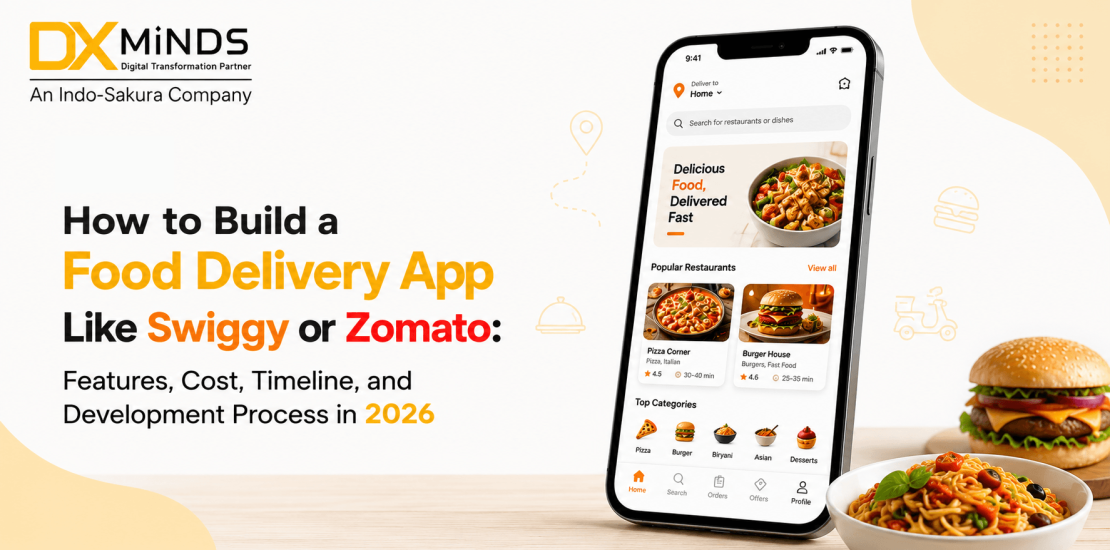
The food delivery industry continues to thrive in 2026 as consumers increasingly prefer ordering meals through mobile applications. Platforms like Swiggy and Zomato have revolutionized the way people discover restaurants, place orders, and receive food at their doorstep. Their success has inspired startups, restaurant chains, and entrepreneurs worldwide to invest in food delivery app development.
If you are planning to launch a food delivery platform, understanding the development process, required features, timeline, and estimated costs is essential. This comprehensive guide explains everything you need to know about building a food delivery app like Swiggy or Zomato in 2026.
Why Invest in Food Delivery App Development in 2026?
The global food delivery market continues to expand due to changing consumer behavior, increasing smartphone penetration, and advancements in digital payment technologies. Customers now expect seamless ordering experiences, real-time delivery tracking, and personalized recommendations.
Businesses that invest in food delivery applications can:
- Reach a larger customer base
- Increase revenue streams
- Improve customer retention
- Streamline restaurant operations
- Enhance customer convenience
- Generate recurring revenue through commissions and subscriptions
With the growing demand for on-demand services, launching a food delivery app has become one of the most profitable digital business opportunities.
Understanding the Food Delivery Business Model
Before development begins, it is important to choose the right business model.
Aggregator Model
This model connects customers with multiple restaurants. The platform manages restaurant listings and customer orders but does not handle deliveries directly.
Order and Delivery Model
The platform manages both food ordering and delivery logistics. Swiggy follows this model extensively.
Restaurant-Owned Delivery Model
A single restaurant or chain operates its own food delivery application to serve customers directly.
Among these models, the aggregator-plus-delivery model remains the most successful and scalable approach.
Key Features of a Food Delivery App Like Swiggy or Zomato
A successful food delivery platform consists of three primary applications:
Customer App
User Registration and Login
Users should be able to register using an email address, a phone number, or a social media account.
Restaurant Search
Customers should easily search restaurants by cuisine, ratings, location, and food categories.
Smart Filters
Advanced filters improve the user experience and help customers find relevant food options.
Menu Browsing
Detailed menus with images, descriptions, pricing, and customization options.
Cart Management
Users should be able to add items, modify quantities, and apply coupons.
Multiple Payment Options
Support for:
- Credit cards
- Debit cards
- UPI
- Digital wallets
- Net banking
- Cash on delivery
Real-Time Order Tracking
Live GPS tracking allows customers to monitor delivery progress.
Ratings and Reviews
Customers can review restaurants and delivery experiences.
Push Notifications
Order updates, promotional offers, and personalized recommendations.
Restaurant Panel Features
Restaurants need a dedicated dashboard to manage their operations.
Restaurant Registration
Restaurant owners can create and manage their profiles.
Menu Management
Add, update, and remove food items.
Order Management
Accept, reject, or prepare incoming orders.
Inventory Tracking
Manage stock availability in real time.
Analytics Dashboard
Track orders, revenue, customer feedback, and business performance.
Delivery Partner App Features
Delivery personnel play a critical role in ensuring customer satisfaction.
Registration and Verification
Secure onboarding process.
Order Assignment
Automatic order allocation based on proximity.
Route Optimization
GPS-based navigation for faster deliveries.
Earnings Dashboard
Track completed deliveries and earnings.
Availability Management
Delivery agents can set their working status.
Admin Panel Features
The admin dashboard acts as the control center.
User Management
Monitor customers, restaurants, and delivery partners.
Commission Management
Configure commission structures.
Revenue Tracking
Monitor platform earnings and financial reports.
Coupon and Promotion Management
Create discounts and loyalty campaigns.
Analytics and Reporting
Access business intelligence and performance metrics.
Advanced Features to Consider in 2026
Modern food delivery apps are integrating advanced technologies to improve user experience.
AI-Based Recommendations
Recommend restaurants and dishes based on customer preferences.
Voice Search
Allow users to search for food using voice commands.
AI Chatbots
Provide instant customer support.
Predictive Analytics
Forecast demand and optimize delivery operations.
Subscription Programs
Premium memberships offer free delivery and exclusive discounts.
Contactless Delivery
Improved convenience and safety.
Loyalty Programs
Reward repeat customers with points and discounts.
Technology Stack for Food Delivery App Development
Selecting the right technology stack is crucial for scalability and performance.
Frontend
- Flutter
- React Native
- Swift
- Kotlin
Backend
- Node.js
- Python
- Laravel
- Java
Database
- PostgreSQL
- MongoDB
- MySQL
Cloud Infrastructure
- AWS
- Google Cloud
- Microsoft Azure
Real-Time Tracking
- Google Maps API
- Mapbox
Payment Gateway Integration
- Stripe
- Razorpay
- PayPal
Food Delivery App Development Process
Step 1: Market Research
Analyze competitors such as Swiggy, Zomato, Uber Eats, and regional food delivery platforms.
Step 2: Requirement Analysis
Define business objectives, target audience, and platform requirements.
Step 3: UI/UX Design
Create wireframes and user-friendly interfaces.
Step 4: Development
Build customer, restaurant, delivery, and admin applications.
Step 5: Third-Party Integrations
Integrate payment gateways, maps, notifications, and analytics tools.
Step 6: Testing
Perform:
- Functional testing
- Security testing
- Performance testing
- Compatibility testing
Step 7: Deployment
Launch applications on Android, iOS, and web platforms.
Step 8: Maintenance and Upgrades
Regular updates ensure security and feature enhancements.
Food Delivery App Development Timeline
The timeline depends on project complexity.
MVP Version
- Planning: 2 weeks
- Design: 3 weeks
- Development: 8 weeks
- Testing: 2 weeks
Estimated Timeline:
3 to 4 months
Full-Scale Application
- Planning: 3 weeks
- Design: 4 weeks
- Development: 12 to 16 weeks
- Testing: 3 weeks
Estimated Timeline:
5 to 7 months
Food Delivery App Development Cost in 2026
Several factors influence development costs.
Basic MVP
Features:
- User registration
- Restaurant listing
- Ordering system
- Payment gateway
Estimated Cost:
$15,000 to $30,000
Mid-Level Platform
Features:
- Real-time tracking
- Notifications
- Delivery app
- Analytics
Estimated Cost:
$30,000 to $70,000
Enterprise-Level Solution
Features:
- AI recommendations
- Advanced analytics
- Multi-city operations
- Subscription management
Estimated Cost:
$70,000 to $150,000+
Monetization Strategies
Commission on Orders
Charge restaurants a percentage per order.
Delivery Fees
Customers pay for delivery services.
Featured Listings
Restaurants pay for premium visibility.
Subscription Plans
Offer monthly memberships.
Advertising Revenue
Restaurants pay for promotional placements.
Common Challenges and Solutions
Delivery Delays
Implement route optimization and smart dispatching.
High Customer Acquisition Costs
Focus on referral programs and loyalty rewards.
Restaurant Retention
Provide performance analytics and marketing support.
Operational Complexity
Automate workflows using AI and analytics tools.
Why Choose DxMinds for Food Delivery App Development?
DxMinds specializes in building scalable, feature-rich, and high-performance food delivery applications for startups and enterprises. Our experienced development team leverages the latest technologies to create customized food delivery solutions tailored to business requirements.
From UI/UX design and mobile app development to cloud deployment and post-launch support, DxMinds delivers end-to-end solutions that help businesses compete effectively in the evolving food delivery market.
Conclusion
Building a food delivery app like Swiggy or Zomato in 2026 requires careful planning, the right technology stack, and a customer-centric approach. By incorporating essential features, leveraging AI-driven innovations, and focusing on operational efficiency, businesses can create successful food delivery platforms that drive growth and customer satisfaction.
Whether you are a startup, restaurant chain, or entrepreneur, investing in food delivery app development presents a significant opportunity to capitalize on the rapidly growing on-demand economy. Partnering with an experienced app development company like DX Minds can help transform your idea into a scalable and profitable digital platform.
Frequently Asked Questions
1) How much does it cost to build a food delivery app in 2026?
₹3.5L–₹20L+ in India; $5,000–$15,000 globally for basic versions.
2) How long does it take to develop a Swiggy-like app?
4–6 months from scratch; 7–14 days for white-label solutions.
3) What features are essential for a food delivery app?
User registration, restaurant search, real-time tracking, secure payments, order history, reviews.
4) Can I build an app without coding?
Yes, using white-label solutions or no-code platforms like Bubble, but custom development offers better scalability.
5) Which tech stack is best for food delivery apps?
React Native/Flutter (frontend), Node.js/Django (backend), MongoDB/PostgreSQL (database), Google Maps API.