
- June 11, 2026
- Posted by: Admin
- Category: Internet of Things
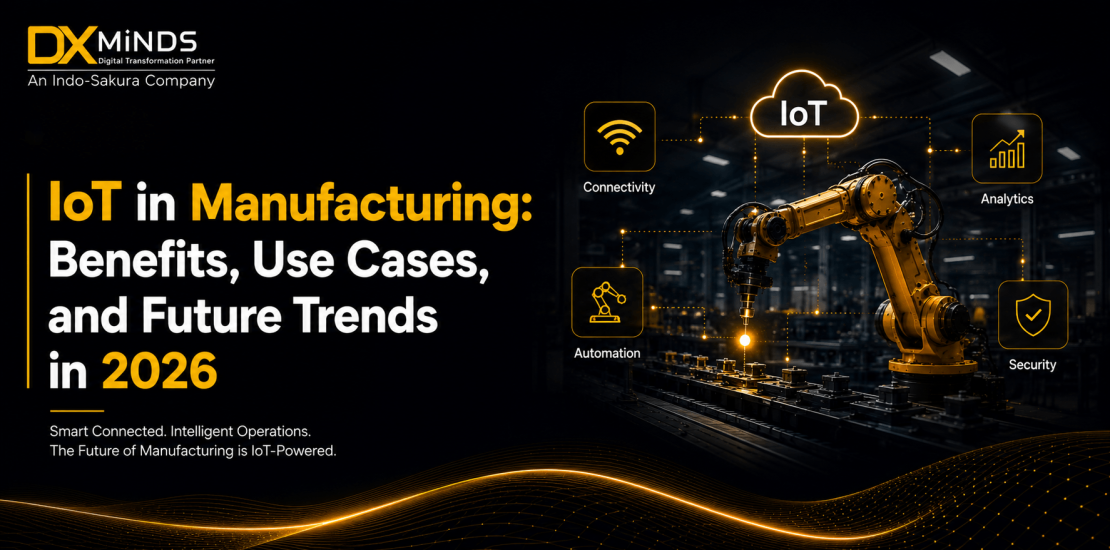
The manufacturing industry is undergoing a major digital transformation. As businesses strive to improve efficiency, reduce operational costs, and enhance product quality, the Internet of Things (IoT) in manufacturing has emerged as a game-changing technology.
From smart factories and predictive maintenance to real-time asset monitoring and automated production lines, IoT is revolutionizing how manufacturers operate. According to industry reports, global investments in Industrial IoT (IIoT) continue to grow rapidly as manufacturers embrace connected ecosystems to stay competitive in an increasingly digital economy.
In 2026, IoT is no longer just an innovation; it has become a strategic necessity for manufacturers looking to improve productivity, optimize supply chains, and make data-driven decisions.
This article explores the benefits, real-world use cases, challenges, and future trends shaping IoT in manufacturing.
What is IoT in Manufacturing?
IoT in Manufacturing, often referred to as the Industrial Internet of Things (IIoT), involves connecting machines, sensors, equipment, and production systems through the internet to collect, exchange, and analyze data in real time.
These connected devices continuously generate operational insights that help manufacturers:
- Monitor machine performance
- Predict equipment failures
- Optimize production processes
- Improve worker safety
- Reduce energy consumption
- Enhance product quality
By integrating IoT devices with cloud platforms, AI analytics, and automation systems, manufacturers can create smart factories that operate with greater efficiency and visibility.
Why IoT is Important for Modern Manufacturing
Traditional manufacturing systems often rely on periodic inspections and manual monitoring. This approach can result in:
- Unexpected machine failures
- Production delays
- Higher maintenance costs
- Quality inconsistencies
- Increased operational risks
IoT eliminates these inefficiencies by providing continuous visibility into operations.
Manufacturers can:
- Detect issues before they become critical
- Monitor production lines remotely
- Automate workflows
- Improve asset utilization
- Enhance operational agility
This real-time intelligence enables faster decision-making and better resource allocation.
How IoT Works in Manufacturing
A typical IoT manufacturing ecosystem consists of four key components:
-
Sensors and Connected Devices
Sensors collect data from machines, equipment, and production environments.
Examples include:
- Temperature sensors
- Pressure sensors
- Vibration sensors
- Motion sensors
- Energy meters
- RFID tags
-
Connectivity
Data is transmitted through:
- Wi-Fi
- Bluetooth
- Zigbee
- LPWAN
- Ethernet
- 5G networks
-
Data Processing Platforms
IoT platforms process incoming data from devices and transform it into actionable insights.
These platforms may operate through:
- Cloud computing
- Edge computing
- Hybrid infrastructures
-
Analytics and Automation
Advanced analytics tools use AI and machine learning to identify patterns, predict failures, and automate responses.
Key Benefits of IoT in Manufacturing
-
Predictive Maintenance
One of the most valuable applications of IoT is predictive maintenance.
Sensors continuously monitor equipment health and identify signs of wear before failures occur.
Benefits:
- Reduced downtime
- Lower maintenance costs
- Increased equipment lifespan
- Improved production continuity
-
Real-Time Equipment Monitoring
IoT enables manufacturers to track machine performance in real time.
Managers can instantly access:
- Equipment status
- Production output
- Operating conditions
- Performance metrics
Benefits:
- Faster issue detection
- Improved operational visibility
- Enhanced production efficiency
-
Improved Product Quality
IoT sensors monitor production parameters throughout manufacturing processes.
Manufacturers can identify deviations immediately and take corrective action before defects occur.
Benefits:
- Consistent product quality
- Reduced waste
- Lower rework costs
- Improved customer satisfaction
- Enhanced Supply Chain Visibility
Connected devices help manufacturers track inventory, shipments, and raw materials throughout the supply chain.
Benefits:
- Better inventory management
- Reduced stock shortages
- Faster order fulfillment
- Improved supplier coordination
-
Energy Management and Sustainability
Energy costs represent a significant portion of manufacturing expenses.
IoT-enabled energy monitoring systems help identify inefficient equipment and optimize energy usage.
Benefits:
- Lower energy consumption
- Reduced operational costs
- Improved sustainability
- Reduced carbon footprint
-
Increased Workplace Safety
IoT sensors can monitor environmental conditions and worker activities to improve safety.
Examples include:
- Gas leak detection
- Temperature monitoring
- Wearable safety devices
- Hazard alerts
Benefits:
- Fewer workplace accidents
- Better regulatory compliance
- Improved employee well-being
Top IoT Use Cases in Manufacturing
-
Smart Factory Automation
Smart factories use IoT-connected machines and systems to automate production processes.
Applications:
- Automated assembly lines
- Machine-to-machine communication
- Autonomous production systems
Result:
Higher productivity and reduced human intervention.
-
Predictive Maintenance Systems
Manufacturers deploy vibration, temperature, and pressure sensors to monitor machine health.
Industries:
- Automotive
- Aerospace
- Heavy equipment manufacturing
Result:
Reduced breakdowns and maintenance expenses.
-
Asset Tracking and Management
IoT devices track the location and condition of manufacturing assets.
Assets Monitored:
- Tools
- Equipment
- Vehicles
- Inventory
Result:
Improved utilization and reduced losses.
-
Digital Twin Technology
A digital twin is a virtual representation of a physical machine or production system.
IoT sensors provide real-time data to update the digital model continuously.
Benefits:
- Simulate performance
- Predict failures
- Optimize production
Result:
Better operational planning.
-
Remote Equipment Monitoring
Manufacturers can monitor machinery across multiple facilities from a centralized dashboard.
Benefits:
- Reduced onsite inspections
- Faster troubleshooting
- Lower operational costs
-
Inventory Management
IoT sensors automatically monitor inventory levels.
Benefits:
- Prevent stockouts
- Improve inventory accuracy
- Reduce carrying costs
Result:
More efficient warehouse operations.
-
Connected Worker Solutions
Wearable IoT devices help improve workforce productivity and safety.
Examples include:
- Smart helmets
- Smart glasses
- Health monitoring wearables
Benefits:
- Real-time alerts
- Improved worker efficiency
- Enhanced safety compliance
Industry Applications of IoT in Manufacturing
Automotive Manufacturing
Manufacturers use IoT for:
- Robotic assembly lines
- Predictive maintenance
- Quality inspection
- Supply chain tracking
Outcomes:
- Reduced production downtime
- Improved product consistency
Electronics Manufacturing
IoT helps monitor sensitive production environments.
Outcomes:
- Better quality control
- Reduced component failures
Pharmaceutical Manufacturing
IoT ensures compliance and product quality.
Applications:
- Environmental monitoring
- Cold chain tracking
- Equipment monitoring
Food and Beverage Manufacturing
Connected sensors monitor:
- Storage conditions
- Production temperatures
- Equipment performance
Outcomes:
- Improved food safety
- Regulatory compliance
Challenges of Implementing IoT in Manufacturing
Despite its advantages, manufacturers face several implementation challenges.
Cybersecurity Risks
Connected devices increase potential attack surfaces.
Solutions:
- Strong encryption
- Multi-factor authentication
- Network segmentation
- Continuous monitoring
Data Management Complexity
Manufacturing environments generate massive volumes of data.
Solutions:
- Cloud-based analytics
- Edge computing
- Data governance frameworks
Integration with Legacy Systems
Many manufacturers still operate older equipment.
Solutions:
- IoT gateways
- API integrations
- Gradual modernization strategies
Initial Investment Costs
IoT deployment requires investments in:
- Sensors
- Connectivity infrastructure
- Software platforms
- Training
However, long-term ROI often outweighs implementation costs.
Future Trends of IoT in Manufacturing in 2026
AI-Powered Industrial IoT
AI and machine learning are increasingly integrated with IoT systems.
Benefits:
- Automated decision-making
- Predictive analytics
- Intelligent process optimization
Edge Computing Adoption
Manufacturers are moving data processing closer to production equipment.
Benefits:
- Faster response times
- Reduced latency
- Improved reliability
5G-Enabled Smart Factories
5G networks support faster and more reliable IoT connectivity.
Benefits:
- Real-time communication
- Massive device connectivity
- Enhanced automation
Digital Twins Expansion
Digital twin technology will become a standard component of smart factory operations.
Benefits:
- Better simulations
- Improved forecasting
- Enhanced asset performance
Autonomous Manufacturing Systems
Future factories will increasingly rely on self-optimizing systems that require minimal human intervention.
Capabilities:
- Self-monitoring
- Self-diagnosis
- Automated adjustments
Sustainable Manufacturing
IoT will play a crucial role in helping manufacturers achieve sustainability goals.
Areas of Focus:
- Energy efficiency
- Waste reduction
- Carbon tracking
- Resource optimization
How Businesses Can Successfully Implement IoT in Manufacturing
To maximize IoT success, manufacturers should:
Define Clear Business Goals
Focus on measurable objectives, such as:
- Reducing downtime
- Improving quality
- Lowering maintenance costs
Start with Pilot Projects
Begin with small-scale implementations before expanding enterprise-wide.
Invest in Cybersecurity
Protect connected devices and manufacturing networks.
Choose Scalable Platforms
Select IoT solutions that support future growth and technology integration.
Leverage Data Analytics
Transform raw sensor data into actionable business intelligence.
How DxMinds Helps Manufacturers Build Smart IoT Solutions
At DxMinds, we help manufacturers accelerate digital transformation through advanced IoT and Industry 4.0 solutions.
Our IoT expertise includes:
- Industrial IoT (IIoT) Development
- Smart Factory Solutions
- Predictive Maintenance Systems
- Asset Tracking Platforms
- IoT Device Integration
- Edge Computing Solutions
- AI-Powered Manufacturing Analytics
- Cloud-Based IoT Platforms
We enable manufacturers to improve operational efficiency, reduce downtime, and unlock actionable insights from connected production environments.
Conclusion
The adoption of IoT in manufacturing is reshaping the future of industrial operations. From predictive maintenance and smart factory automation to digital twins and AI-powered analytics, IoT provides manufacturers with the tools needed to enhance efficiency, reduce costs, and remain competitive.
As we move through 2026, organizations that embrace Industrial IoT will be better positioned to respond to market demands, improve sustainability, and drive innovation across their operations.
Manufacturers looking to build resilient, intelligent, and future-ready factories should prioritize IoT as a core component of their digital transformation strategy.