


- December 2, 2025
- Posted by: Admin
- Category: Artificial Intelligence
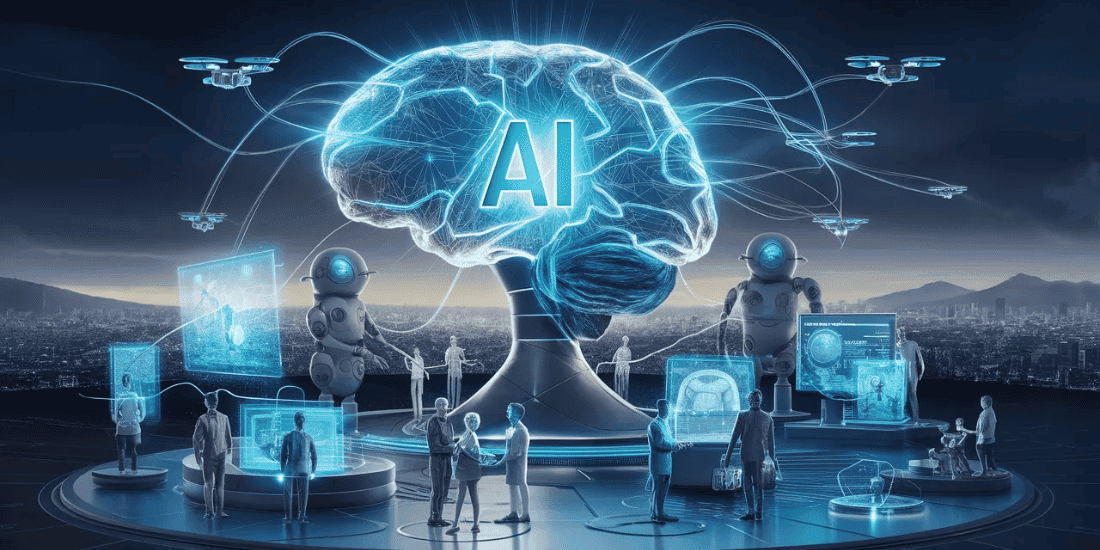
Ethical Challenges and Future of Artificial Intelligence
From a concept of the future, Artificial Intelligence has now become an important part of modern-day technology.
AI touches nearly every aspect of our lives, from chat-bots and smart assistants to self-driving cars and health predictions. But there are also significant ethical concerns raised by this rapid advancement.
This blog reflects upon the future of AI and associated ethical issues; outlines the importance of responsible innovation; and shows ways in which individuals and businesses can contribute toward creating a future wherein technology serves, rather than harms, people: “Black boxes,” in that it’s difficult to understand how they make decisions.
In an increasingly automating world, their solution is essential to giving justice its meaning and instilling confidence.
Why Ethics in AI Matters?
The more powerful AI becomes, the more urgent its ethical considerations become.
Here’s why it is important for society and businesses:
- Trust Fosters Loyalty: Users are more likely to stick to AI products which they see as transparent and fair.
- Regulations are tightening: To regulate the use of AI, governments all over the world are drafting legislation.
- Sustainability: Ethical AI means long-term prosperity for business and society.
- Reputation Benefit: Moral AI boosts the credibility rating of an organization.
Future of Artificial Intelligence
AI holds great promise for the future, but it has to be tamed with human values.
Among the main trends are:
- Ethics by design means embedding responsibility and fairness into every stage of the AI development process.
- Explainable AI is the process of developing systems with the ability to explain their decisions in a manner that is understandable by the public.
- AI governance frameworks are being developed to create guidelines and regulations that can ensure AI is safe, fair, and approved for use.
- Human-AI collaboration means using AI to increase productivity, but still with strong dependence on people in terms of empathy and judgement.
In the future, AI will be able to do much more than data processing; it will reflect the values of its creators.
Real-World Applications and Responsibility
AI is used in many different fields:
- Health: AI can be used to speed up disease diagnosis, but it must be done so that patients’ privacy is not breached.
- Finance: Fraud detection systems should be impartial and transparent.
- Education: Personalised learning resources should not be biased based on gender or cultural factors.
- Transportation: Self-driving cars should make moral decisions in complicated situations.
Each of these applications tests our preparedness to deal with the different moral dilemmas thrown up by AI.
Read more about: Best Mobile App Development Companies in Bangalore.
Conclusion
The future of AI and ethical issues related to it go hand in hand.
Ethics need to be considered as an integral part of the foundation rather than a limitation if we are to realize the full potential of AI. The development of more fair, open, and transparent AI will ensure a world where innovation supports and uplifts people.
Would you like to develop moral AI solutions for your company?
Collaborate with our professionals now to future-proof your technology in an ethical way: Contact us
FAQs
- What are the main ethical challenges of artificial intelligence?
The major ethical challenges of AI are data privacy, algorithmic bias, lack of transparency, accountability in decision-making, and the potential misuse for harm, including deep fakes and surveillance.
- Why is ethics in AI important for businesses?
AI ethics builds trust, secures regulatory compliance, and protects brand reputation. Organizations that embed ethical considerations in the design of AI reap customer loyalty, which prevents possible lawsuits and societal backlash.
- How can companies make their AI systems more ethical?
Ethical frameworks can be enacted by businesses through ensuring equitable data collection, auditing bias, deploying explainable models of AI, establishing internal ethics boards, and ensuring transparency around how an algorithm made a decision.
- What is the role of government regulation in AI ethics?
Government policies set the legal boundaries within which AI can be used. Regulations such as the EU AI Act and developing international standards make sure that AI systems respect human rights, privacy, and safety, promoting responsible innovation.
- What does the future hold for ethical AI?
The future belongs to human-centered AI technology that is in line with human values; we will see more transparency tools, metrics of fairness, and hybrid systems in which humans and machines collaborate on ethical solutions to global problems.