
- April 30, 2026
- Posted by: Jhansi G
- Category: Artificial Intelligence
Introduction
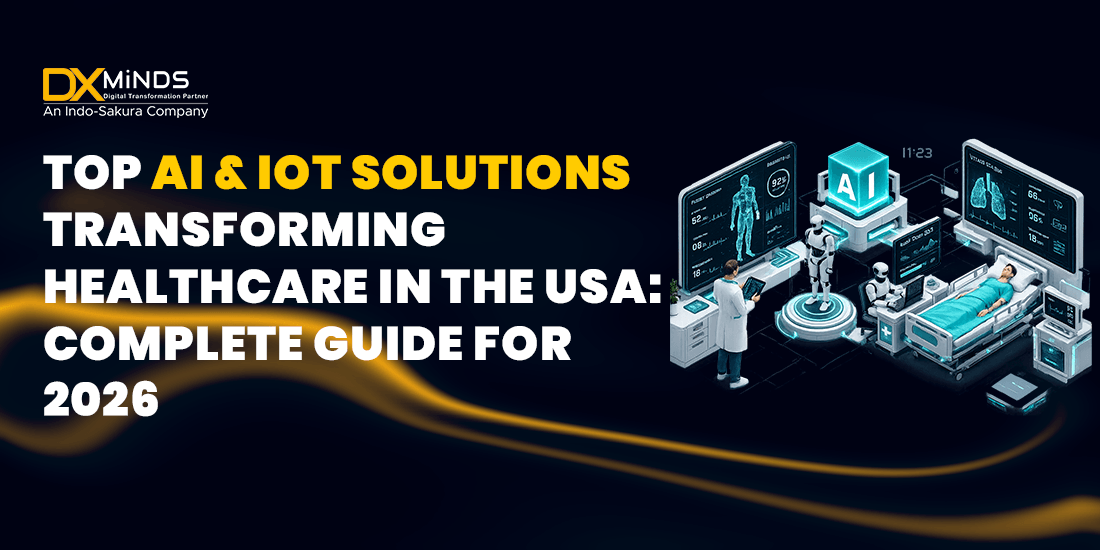
The healthcare industry in the United States is undergoing a rapid transformation driven by cutting-edge technologies like Artificial Intelligence (AI) and the Internet of Things (IoT). From predictive diagnostics to real-time patient monitoring, these technologies are not only improving clinical outcomes but also reshaping how healthcare providers deliver services.
In 2026, the demand for AI healthcare solutions in the USA and IoT healthcare platforms is at an all-time high. Hospitals, clinics, and healthcare startups are actively seeking digital partners to modernize their infrastructure, improve patient engagement, and optimize operational efficiency.
In this comprehensive guide, we’ll explore:
- How AI and IoT are revolutionizing healthcare
- Key use cases and real-world applications
- Benefits for healthcare providers and patients
- Challenges and implementation strategies
- How to choose the right technology partner
The Growing Importance of AI & IoT in Healthcare
The US healthcare ecosystem faces several ongoing challenges:
- Rising operational costs
- Shortage of skilled medical professionals
- Increasing chronic disease cases
- Demand for personalized patient care
AI and IoT are emerging as powerful solutions to address these challenges.
What is AI in Healthcare?
Artificial Intelligence in healthcare involves using machine learning algorithms, natural language processing (NLP), and predictive analytics to:
- Analyze medical data
- Assist in diagnosis
- Automate workflows
- Enhance patient outcomes
What is IoT in Healthcare?
IoT refers to interconnected medical devices and systems that collect and transmit real-time data. These include:
- Wearable health devices
- Remote patient monitoring systems
- Smart hospital infrastructure
Together, AI and IoT create a connected, intelligent healthcare ecosystem.
Top AI Solutions Transforming Healthcare in the USA
-
Predictive Analytics for Early Diagnosis
AI-powered predictive analytics helps detect diseases at an early stage by analyzing patient data patterns.
Use Cases:
- Early cancer detection
- Predicting heart disease risks
- Identifying high-risk patients
Benefits:
- Reduced hospitalization rates
- Improved survival rates
- Cost savings for providers
-
AI-Powered Medical Imaging
AI enhances radiology by analyzing medical images with high accuracy.
Applications:
- X-ray analysis
- MRI and CT scan interpretation
- Automated anomaly detection
Impact:
- Faster diagnosis
- Reduced human error
- Increased efficiency for radiologists
-
Virtual Health Assistants & Chatbots
AI-driven chatbots and voice assistants are transforming patient engagement.
Capabilities:
- Answer patient queries
- Schedule appointments
- Provide medication reminders
-
Personalized Treatment Plans
AI analyzes patient history, genetics, and lifestyle data to recommend personalized treatments.
Benefits:
- Improved treatment effectiveness
- Reduced trial-and-error approach
- Better patient satisfaction
-
AI in Drug Discovery
AI accelerates drug development by analyzing biological data and predicting molecule interactions.
Advantages:
- Reduced R&D time
- Lower costs
- Faster market entry
Top IoT Solutions Transforming Healthcare in the USA
-
Remote Patient Monitoring (RPM)
IoT devices allow healthcare providers to monitor patients remotely in real time.
Devices Include:
- Wearable heart monitors
- Glucose sensors
- Blood pressure trackers
Benefits:
- Reduced hospital visits
- Continuous patient monitoring
- Early detection of complications
-
Smart Wearables
Wearable devices are becoming a core part of modern healthcare systems.
Examples:
- Fitness trackers
- Smartwatches with ECG
- Sleep monitoring devices
Impact:
- Preventive healthcare
- Increased patient engagement
- Real-time health insights
-
Connected Medical Devices
IoT-enabled medical equipment improves hospital efficiency.
Applications:
- Smart infusion pumps
- Connected ventilators
- Asset tracking systems
Benefits:
- Reduced equipment downtime
- Better resource management
- Enhanced patient safety
-
Smart Hospitals
IoT is enabling fully automated, intelligent hospital environments.
Features:
- Automated lighting and temperature control
- Real-time asset tracking
- Smart patient beds
Outcome:
- Improved operational efficiency
- Enhanced patient experience
- Reduced operational costs
-
IoT-Based Emergency Response Systems
IoT solutions enable faster emergency response through real-time alerts and data sharing.
Use Cases:
- Ambulance tracking
- Emergency alerts
- Real-time patient data transfer
Combined Power of AI & IoT in Healthcare
When AI and IoT work together, they create a powerful ecosystem known as AIoT (Artificial Intelligence of Things).
Key Benefits:
- Real-time data analysis
- Predictive healthcare insights
- Automated decision-making
- Improved patient outcomes
Example:
A wearable device collects patient data (IoT), and AI analyzes it to predict potential health risks.
Benefits of AI & IoT for Healthcare Providers
-
Improved Patient Outcomes
- Early diagnosis
- Personalized treatments
- Continuous monitoring
-
Operational Efficiency
- Automation of administrative tasks
- Reduced workload for staff
- Optimized resource utilization
-
Cost Reduction
- Lower hospitalization costs
- Reduced manual errors
- Efficient workflow management
-
Enhanced Patient Experience
- Faster service
- Better communication
- Personalized care
Challenges in Implementing AI & IoT in Healthcare
Despite the benefits, there are several challenges:
-
Data Security & Privacy
Healthcare data is highly sensitive, making cybersecurity a top priority.
-
Integration with Legacy Systems
Many healthcare providers still rely on outdated systems.
-
High Initial Investment
Implementing AI and IoT solutions requires high upfront costs.
-
Regulatory Compliance
Healthcare solutions must comply with regulations like HIPAA in the USA.
How to Successfully Implement AI & IoT in Healthcare
-
Define Clear Objectives
Identify specific problems you want to solve.
-
Choose the Right Technology Stack
Select scalable and secure technologies.
-
Partner with an Experienced Development Company
Working with an expert partner ensures smooth implementation.
-
Focus on Data Security
Implement robust encryption and compliance measures.
-
Start with a Pilot Project
Test the solution before full-scale deployment.
Why Healthcare Businesses in the USA Are Investing in AI & IoT
- Increasing demand for digital healthcare
- Government support for innovation
- Rise of telehealth and remote care
- Need for cost optimization
Choosing the Right AI & IoT Development Partner
Selecting the right partner is critical for success.
Key Factors to Consider:
- Industry experience in healthcare
- Expertise in AI/ML and IoT
- Strong portfolio and case studies
- Compliance knowledge (HIPAA)
- Scalable and secure solutions
How DxMinds Can Help
DxMinds is a trusted technology partner delivering advanced AI healthcare solutions in the USA and globally.
Our Expertise Includes:
- Custom healthcare app development
- AI-powered analytics platforms
- IoT-based patient monitoring systems
- Smart healthcare solutions
- AI Voice Agent for Healthcare
What Sets Us Apart:
- Deep domain expertise
- Scalable architecture
- End-to-end development
- Focus on innovation and ROI
Future Trends in AI & IoT Healthcare
-
AI-Powered Robotic Surgeries
More precise and minimally invasive procedures.
-
Advanced Wearables
Devices capable of detecting complex health conditions.
-
Digital Twins in Healthcare
Virtual patient replicas for simulation and analysis.
-
Blockchain for Data Security
Enhanced security for healthcare data.
-
Hyper-Personalized Medicine
AI-driven treatment plans tailored to individuals.
Conclusion
AI and IoT are no longer optional in the US healthcare industry—they are essential for survival and growth. From predictive diagnostics to smart hospitals, these technologies are revolutionizing every aspect of healthcare delivery.
Organizations that embrace AI healthcare solutions in the USA and invest in IoT healthcare platforms will gain a competitive edge by improving patient outcomes, reducing costs, and enhancing operational efficiency.
If you’re a healthcare provider, startup, or enterprise looking to transform your digital capabilities, now is the time to act.
Frequently Asked Questions
1. How is AI used in healthcare in the USA?
AI is used in the US healthcare system for predictive diagnostics, medical imaging analysis, virtual assistants, and personalized treatment. It helps improve accuracy, speed up decision-making, and enhance patient outcomes.
2. What are the key benefits of AI and IoT in healthcare?
AI and IoT improve patient outcomes, enable real-time monitoring, reduce operational costs, and enhance patient engagement. They also help automate workflows and deliver more personalized healthcare services.
3. How does IoT improve patient care?
IoT improves patient care by enabling continuous monitoring through connected devices. It allows real-time tracking of health data, early detection of issues, and faster medical response, reducing hospital visits.
4. What is remote patient monitoring using IoT?
Remote patient monitoring uses IoT devices to collect and transmit patient health data in real time. Doctors can track vital signs remotely and provide timely care without requiring frequent hospital visits.
5. How do AI chatbots and voice agents help in healthcare?
AI chatbots and voice agents automate patient interactions by handling queries, booking appointments, and sending reminders. They improve patient experience while reducing administrative workload for healthcare providers.